Pass IELTS, JAMB, WAEC, & more with EduPadi CBT App
Practice questions, get instant scores, understand solutions with smart AI insights, and track your progress.
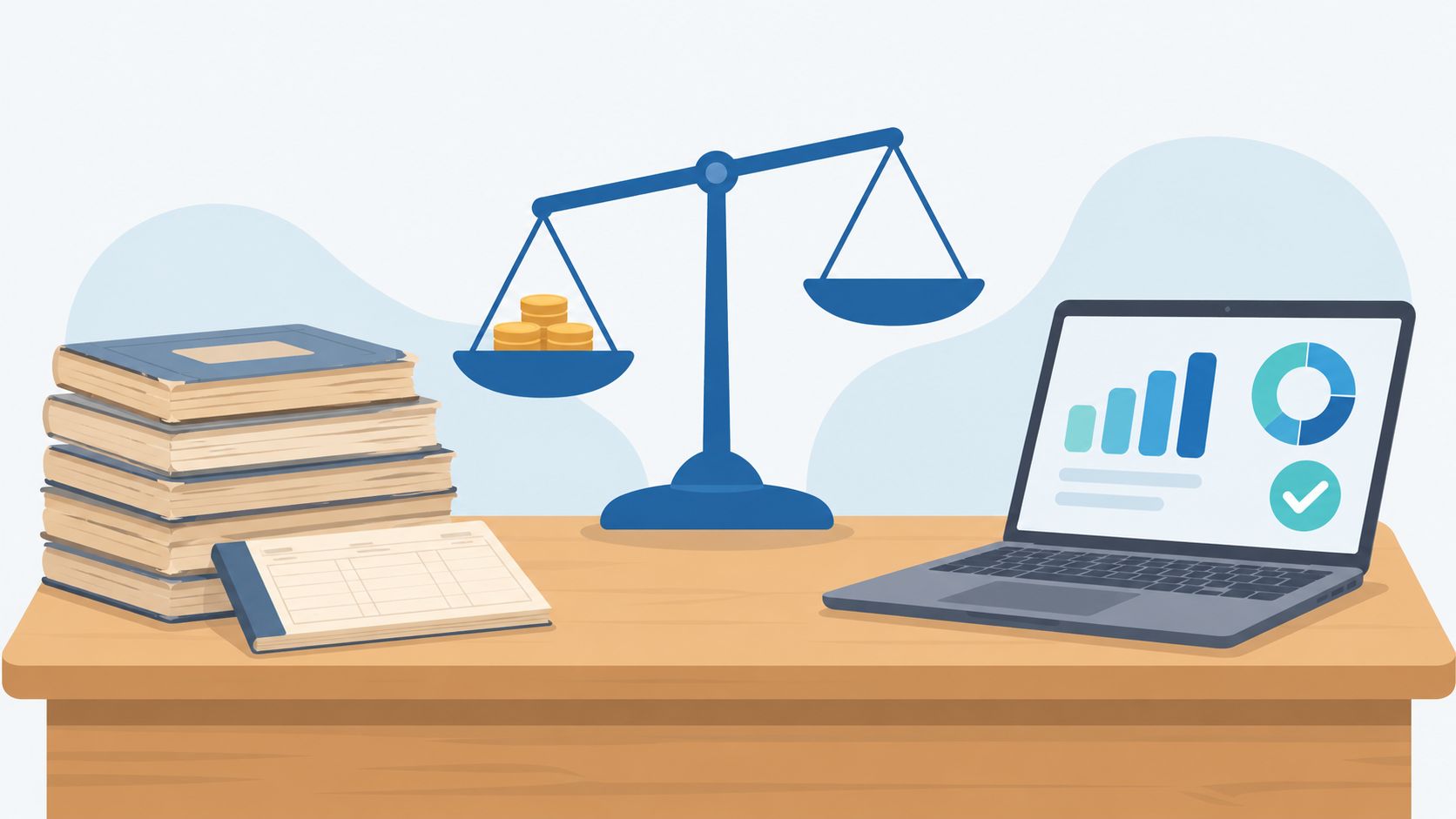
Paper Records vs. School Management Software: A 300-Student Cost Comparison
Paper looks free because you never get a bill for it. We worked through a real cost comparison for a 300-student school, covering printing, teacher time, fee leakage, and lost records, so you can see what your registers are costing you.
Ask most school owners what their paper records cost and the answer is "nothing much, just stationery."
That answer leaves out most of the cost. Paper doesn't send you an invoice. Its costs show up as a teacher losing a weekend to result computation, a bursar unable to say who has paid, and a parent's receipt that nobody can find.
This post puts numbers on those costs for a typical school, and then compares them with the cost of software. The numbers are illustrative assumptions, not guarantees. Your school is different, so we show the working and you can swap in your own figures.
The school we're modelling
- 300 students
- 3 terms per year
- About 20 teachers, 10 of them class teachers
- 1 bursar and 1 admin officer
- Average annual fees of ₦200,000 per student, so about ₦60 million a year in fees
Part 1: What paper really costs per year
| Cost | How we got it | Per year |
|---|---|---|
| Report cards (printing, paper, ink) | 300 students × 3 terms × ₦500 | ₦450,000 |
| Registers, ledgers, receipt books, files | Estimate | ₦150,000 |
| Teacher time compiling results | 10 class teachers × 2 days × 3 terms = 60 days × ₦3,500 | ₦210,000 |
| Bursar time reconciling payments | 5 days × 3 terms = 15 days × ₦5,000 | ₦75,000 |
| Fee reminders and circulars (letters, calls, SMS) | Estimate | ₦100,000 |
| Direct and time costs | ₦985,000 |
Some of this does not appear in the school's accounts. The teacher and bursar hours are salaries you already pay. Those people are spending that time on compilation when they could be teaching, marking, or following up with parents.
The hidden cost: fee leakage
This line is hard to measure and often the biggest.
When payments live in a receipt book and a ledger, money slips through:
- A payment is recorded against the wrong child.
- A part-payment is forgotten by the next term.
- A parent says they paid, and there is no quick way to check.
- A receipt book goes missing, or the entries are unreadable.
If your school loses just 1% of its fees this way, that is:
₦60,000,000 × 1% = ₦600,000 a year
We use 1% as a cautious example. Some schools lose more and some less. Look at your own records to find your real figure.
Total yearly cost of paper in this model: ₦1,585,000
Part 2: What software costs
| Cost | How we got it | Per year |
|---|---|---|
| Subscription (example) | 300 students × 3 terms × ₦400 | ₦360,000 |
| Report cards still printed for half the students | 150 × 3 × ₦500 | ₦225,000 |
| Reduced stationery | Estimate | ₦50,000 |
| Teacher time on results | 10 days × ₦3,500 | ₦35,000 |
| Bursar time on reconciliation | 3 days × ₦5,000 | ₦15,000 |
| Fee reminders and circulars | Estimate | ₦30,000 |
| Direct and time costs | ₦715,000 | |
| Fee leakage at 0.25% | ₦60,000,000 × 0.25% | ₦150,000 |
Total yearly cost of software in this model: ₦865,000
The subscription price above is an example, not a quote. Use whatever the provider actually charges.
Part 3: Reading the result
| Paper | Software | |
|---|---|---|
| Direct and time costs | ₦985,000 | ₦715,000 |
| Fee leakage | ₦600,000 | ₦150,000 |
| Total | ₦1,585,000 | ₦865,000 |
In this example, software saves about ₦720,000 a year, which is roughly 45% of what paper costs. Treat that as a result of these assumptions, not a promise. Your own numbers will move it up or down.
Two things in this table matter more than the total:
- Most of the saving comes from time and leakage, not from the subscription itself. Even with zero fee leakage under both systems, software still comes out ahead in this model (₦715,000 vs ₦985,000), but the gap shrinks to about ₦270,000.
- Leakage is the biggest swing factor. If your leakage is 3% instead of 1%, paper costs about ₦1.2 million more per year, because you lose ₦1.8 million instead of ₦600,000.
The break-even formula
You can test any software price against your own numbers:
Break-even price per student per term = (Your yearly paper cost − your yearly cost of everything else under software) ÷ (students × 3)
In our example: (₦1,585,000 − ₦505,000) ÷ 900 = ₦1,200 per student per term. At ₦400, the example price is well under that, which is why the saving is large. Software priced below your break-even saves money in this model. Priced above it, the cash cost is higher and you are paying for the other benefits.
The bottom line
Paper isn't free. It costs you time, printing, and some of your fees. Software costs money too, and the honest comparison depends on your leakage, your staff time, and the price you are quoted.
Do the calculation with your own numbers. If the break-even price is above what a provider charges, you will probably save money. If it isn't, ask whether safety, speed, and trust are worth the difference. For many schools they are.